
Clear Glass, Clear Vision
- All
- Product Name
- Product Keyword
- Product Model
- Product Summary
- Product Description
- Multi Field Search
Views: 0 Author: Site Editor Publish Time: 2026-07-08 Origin: Site


In modern architecture and home renovation, insulated glass (double/triple glazing) has become increasingly popular due to its excellent thermal insulation, soundproofing capabilities, and aesthetic appeal. However, with a wide variety of types and varying quality in the market, how can you pick the right premium insulated glass for your needs?
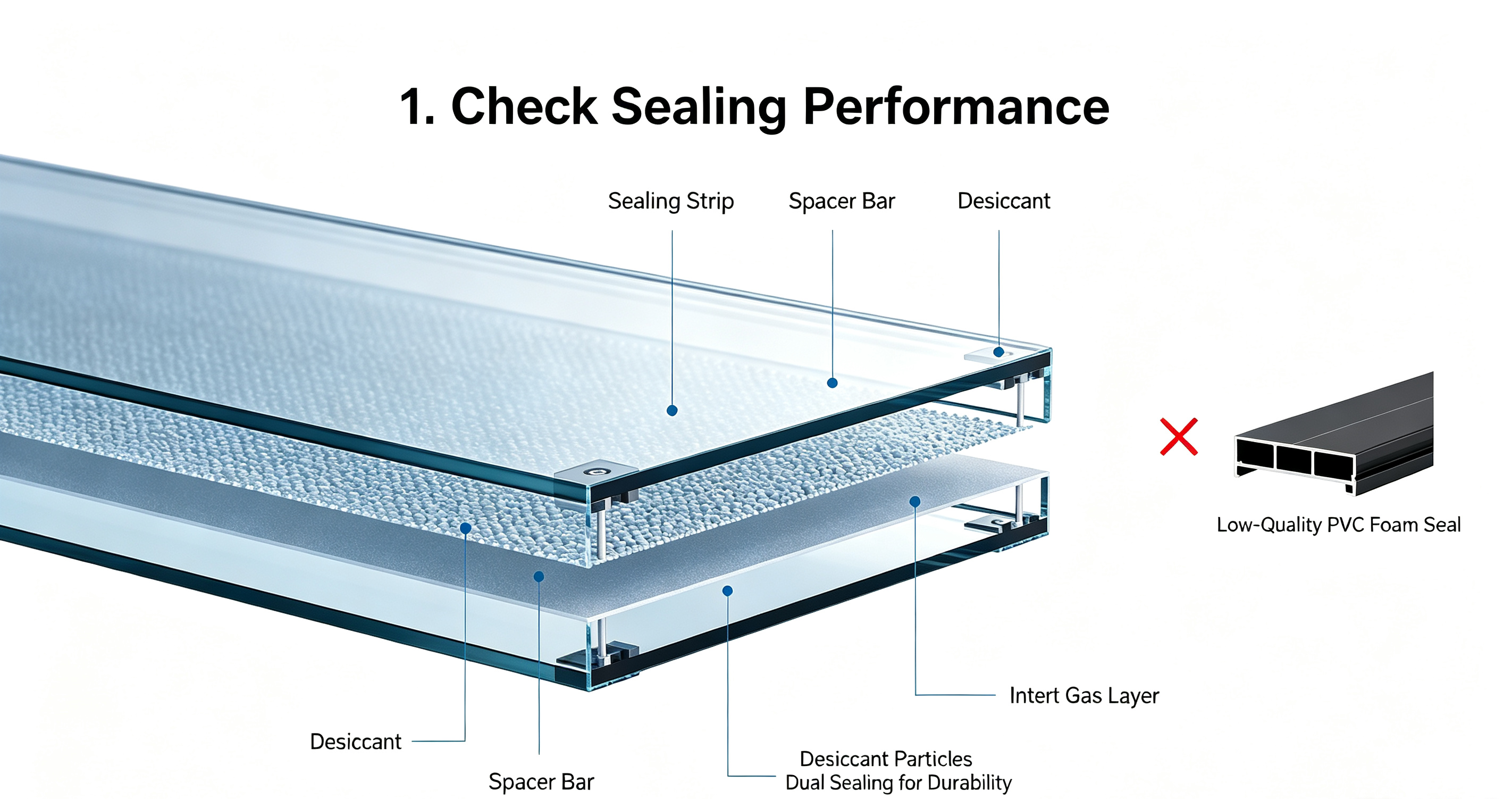
Sealing is the most critical factor in determining the quality of insulated glass. High-quality insulated glass is sealed with specialized sealants, often featuring a vacuum or an inert gas (like Argon) filled inside. This structure guarantees its top-tier sound and heat insulation.
When purchasing, you can judge the sealing performance through the following methods:
Observe the Sealing Strips: Premium insulated glass utilizes professional sealants such as butyl rubber, silicone sealant, or polysulfide sealant. These materials offer exceptional sealing effects and a long lifespan. If cheap black PVC foam strips are used instead, the sealing performance will be poor, and it is highly likely a counterfeit product.
Inspect the Aluminum Spacer: Authentic insulated glass features an aluminum spacer between the glass panes. This spacer has numerous perforations and contains a desiccant (drying agent) inside to absorb moisture, preventing the glass from fogging up when temperature changes. The absence of an aluminum spacer, or holes/desiccant within it, is a major red flag.
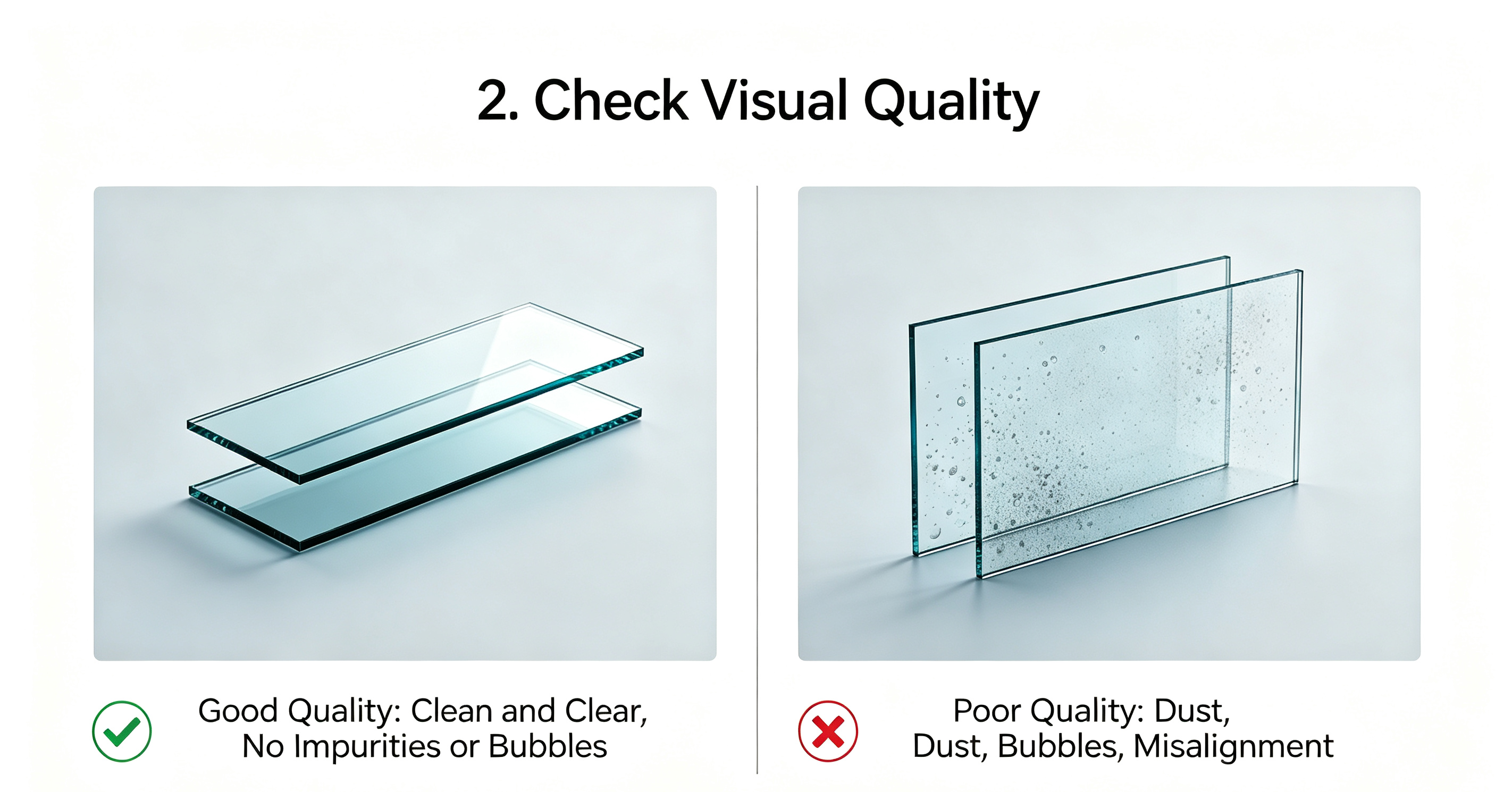
Appearance is another vital standard for judging quality. Premium insulated glass should be pristine, crystal clear, and free of any impurities.
Clarity: Observe the glass under good lighting. If you spot impurities, air bubbles, or dust inside the unit, the product fails to meet standard quality requirements.
Alignment: The glass panes must be perfectly aligned. Any misalignment, shifting, or tilting will not only compromise the aesthetics but also negatively impact the structural integrity and lifespan of the glass.
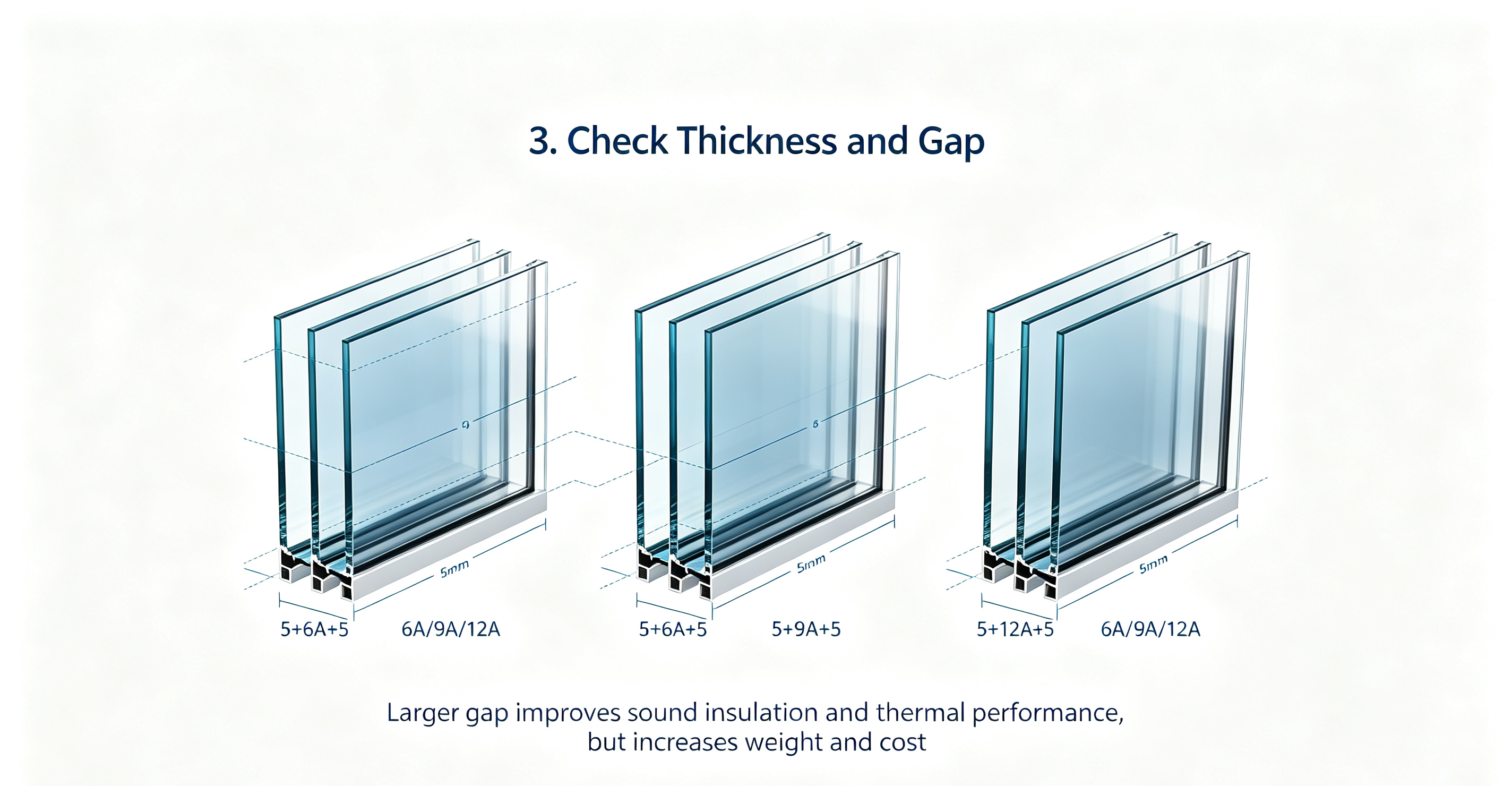
The specifications of insulated glass are often written in formats like 5+6A+5, 5+9A+5, or 5+12A+5 (where the numbers represent the glass thickness, and "A" represents the air gap/spacer thickness in millimeters).
Glass Thickness: Generally, thicker glass offers better strength, security, and thermal insulation. If you have high demands for soundproofing and climate control, opting for thicker glass panes is highly recommended.
Air Gap (Spacer Thickness): The wider the spacer layer, the better the thermal and acoustic performance. However, a wider gap also increases the weight and cost. Common spacer thicknesses include 6mm, 9mm, and 12mm. Choose the appropriate thickness based on your practical needs and budget.
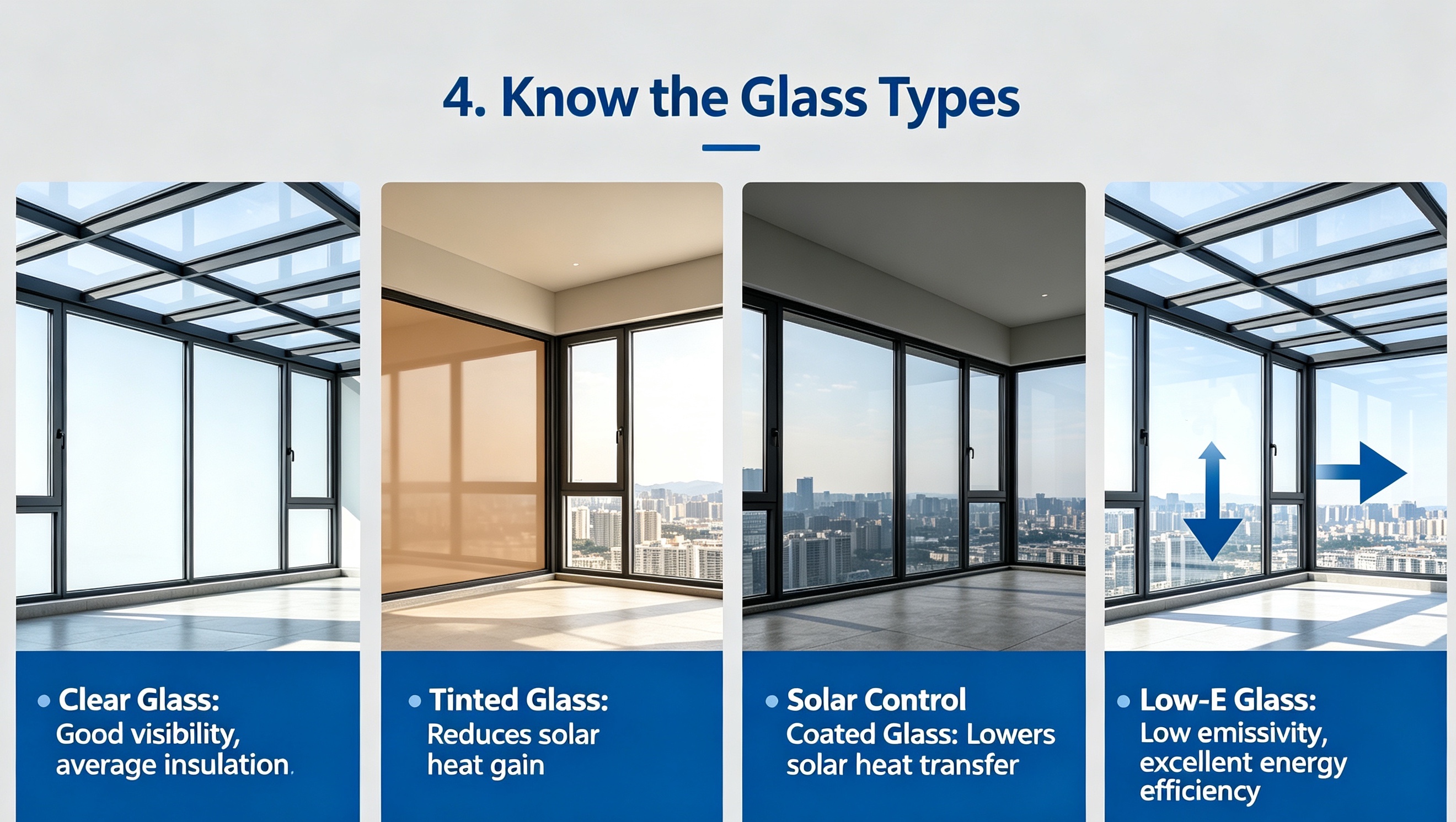
The performance of insulated glass varies significantly depending on the type of glass panes used:
| Glass Type | Characteristics & Performance |
| Clear Glass (Float Glass) | The most common and budget-friendly option. It offers excellent light transmission but standard heat and sound insulation. |
| Heat-Absorbing Glass | Tinted to reduce solar heat transmission and increase absorption. It effectively blocks solar radiation from entering the room, though the tint slightly reduces visible light transmission. |
| Solar Control Coated Glass | Coated with a metal or metal-compound film to lower the Solar Heat Gain Coefficient (SHGC). It excels at blocking direct solar radiation, though it has less effect on reflective thermal radiation. |
| Low-E Glass (Low-Emissivity) | Features a microscopic coating that reflects infrared energy (heat) while letting visible light through. It offers superior thermal performance and exceptional energy savings by keeping indoor heat in during winter and blocking outdoor heat in summer. |
Established manufacturers and trusted brands enforce rigorous quality control and provide reliable after-sales service, which guarantees the long-term performance of your glass.
Before buying, take time to look into the manufacturer’s credentials, production equipment, and manufacturing techniques. Additionally, always ask to see official quality inspection reports and product certifications to ensure the glass fully complies with industry standards.
Summary Choosing the right insulated glass requires a holistic evaluation of its sealing, appearance, thickness, glass type, and brand credibility. By keeping these key pointers in mind, you will easily find the perfect, high-performance insulated glass to elevate the comfort, quietness, and beauty of your home or building project.

