
Clear Glass, Clear Vision
- All
- Product Name
- Product Keyword
- Product Model
- Product Summary
- Product Description
- Multi Field Search
Views: 0 Author: Site Editor Publish Time: 2026-07-06 Origin: Site


In the production of art glass, architectural curtain walls, shower doors, smart bathroom mirrors, and electronic glass, sandblasting is an indispensable process. It transforms transparent glass into a sophisticated matte or frosted texture and allows for the etching of intricate artistic patterns.
However, when planning a glass processing line, manufacturers face a critical question: Should we invest in a vertical or a horizontal flat glass sandblasting machine?
While both machines ultimately achieve the same goal of surface treatment, they differ fundamentally in footprint, handling risks, processing logic, and cleanliness. This article provides a comprehensive comparison to help you make the smartest investment for your facility.
A Vertical Flat Glass Sandblasting Machine utilizes an upright (or slightly tilted, usually around 85°) transport system. The glass sheets enter the machine via vertical support racks on the feeding side, pass through a fully enclosed blasting chamber, and exit seamlessly on the discharge side.
Touch screen operation with PLC control
Equipped with automatic and manual dual modes
Nozzle made of special material for long service life
Automatic dust collection system; filter bags cleaned via reverse air blowing
Dual synchronous conveyor belts prevent sand leakage out of the machine
Low operation and maintenance costs
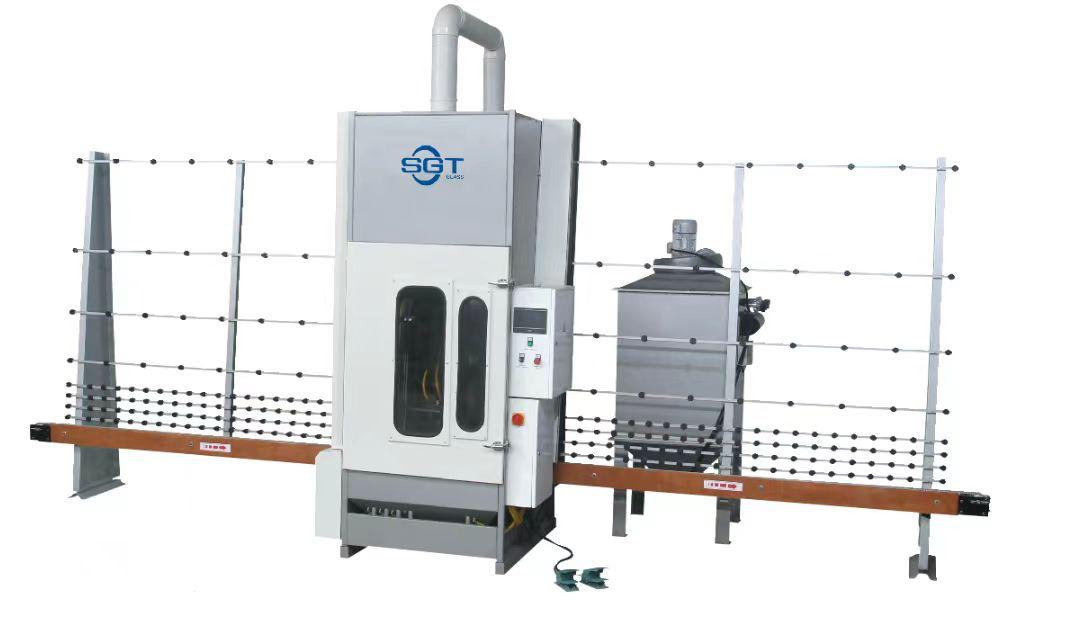
| Parameter | SGTP2000 Specification |
|---|---|
| Model | SGTP2000 |
| Automatic Gun | 3 PCS |
| Manual Gun | 1 PC |
| Sandblasting Speed | 20-25m²/h |
| Max. Glass Size | 2000×3660mm |
| Glass Thickness | 3-50mm |
| Power | 3.5kW |
| External Dimensions | 6800×1500×2800mm |
| Working Pressure | 0.6-0.8Mpa |
| Compressed Air Consumption | 3m³/min 22kW |
| Abrasive Material | Aluminium oxide |
| Gross Weight | 1200kg |
A Horizontal Flat Glass Sandblasting Machine utilizes a flatbed conveyor system. Glass sheets lie completely flat on transport rollers and move horizontally through the sandblasting zone—much like passing through an industrial glass washing or edging machine.
Seamless Inline Integration (High Automation): The biggest advantage of the horizontal configuration is its ability to blend flawlessly into a fully automated, horizontal glass processing line. It can directly connect to horizontal double-edging machines, glass washers, and tempering furnaces, enabling fully automated, continuous production without the need to tilt or manually rotate the glass.
Ergonomic Loading and Unloading: For small to medium-sized or standardized glass sheets, operators can simply lay them flat on the conveyor. This eliminates the strenuous labor of constantly lifting panels vertically and laying them down, significantly reducing worker fatigue.
Low Profile & Easy Maintenance: With its low center of gravity and accessible machine height, operators can easily inspect the interior, adjust fixed nozzles, and perform routine maintenance safely from the ground.
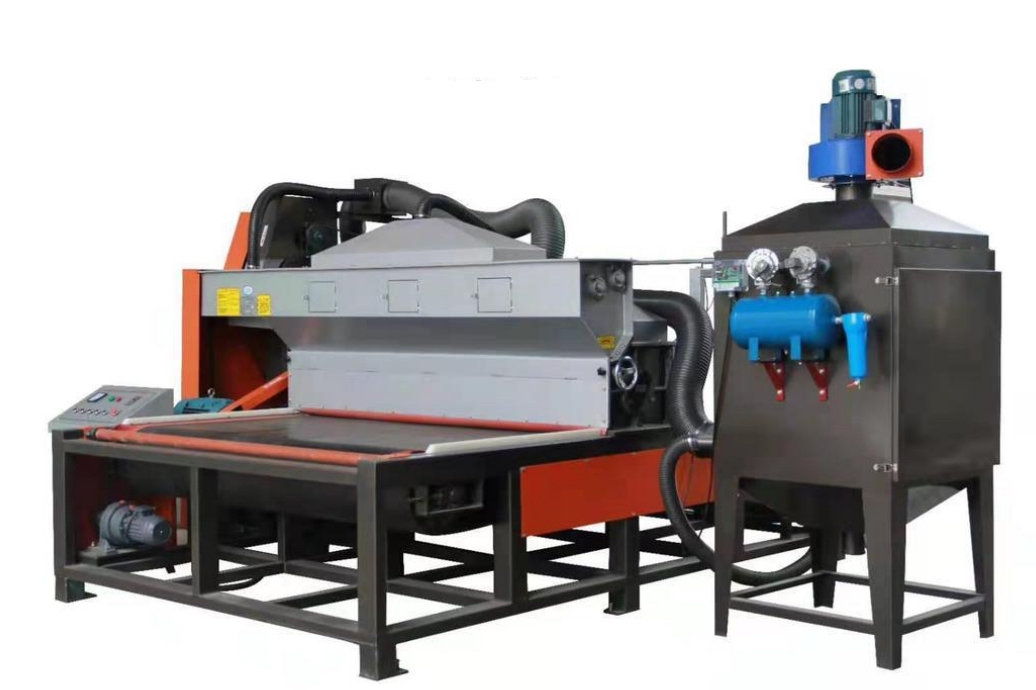
| Parameter | SGTP2000H Specification |
|---|---|
| Model | SGTP2000H |
| Tool | 8 PCS |
| Speed | 0.2-1m/min |
| Max. Glass width | 1900mm |
| Glass Thickness | 3-24mm |
| Power | 7.2kW |
| External Dimensions | 3500×3000×2200mm |
| Abrasive Material | Aluminium oxide |
| Gross Weight | 2500kg |

